
Watonwan County Civil Docket Searches
Most searches begin with Minnesota Court Records Online, called MCRO. It covers public district-court case information statewide. Pick Name for a person or business caption. Pick Case Number when you know the file, or Attorney when that identifier is strongest. Then select Watonwan among court locations and apply the Civil category where it fits. Case Details opens the Register of Actions, the court's chronological log of case activity.
The exact file number beats everything. Without it, search the caption as filed and filter by county. A wildcard can follow two characters. Sounds Like helps with near spellings. The two cannot be combined. Date Filed and case category can narrow a long results list; a wrong date can bury the case you want.
- Open MCRO Case Search and choose Case Number, Name, or Attorney.
- Select Watonwan County and the Civil category when the case type is known.
- Enter the complete identifier without spaces, then choose Find.
- Open View Case Details and review Case Information, Party Information, Case Events, Hearings, Dispositions, and Judgment Details.
- Use Document Search or contact Court Administration for a public document, certified copy, paper file, or off-site record.
The state’s copy-request forms page provides the official directory that includes Watonwan.
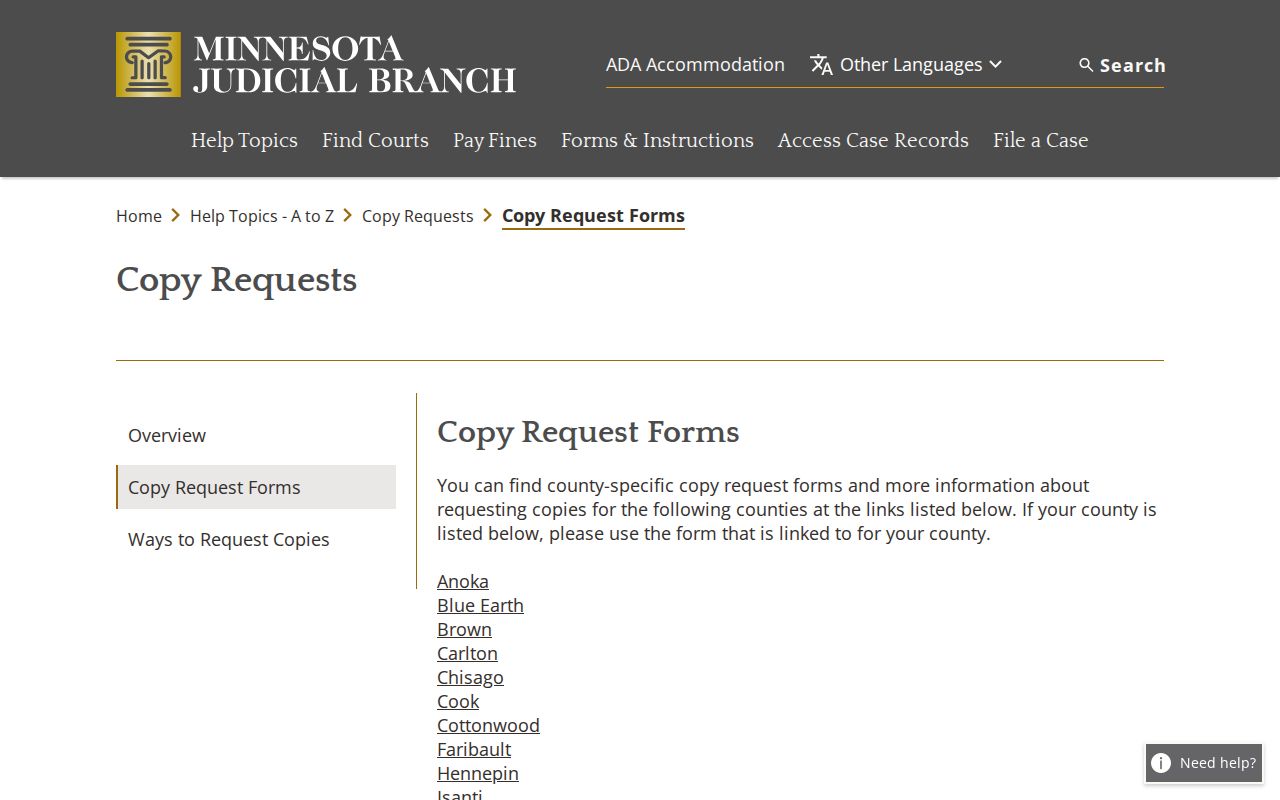
By letter: Minnesota also accepts a letter in place of a form. Identify the case, the document requested, the copy type, delivery method, and your contact information.
Watonwan 83-CV Civil Docket Searches
Watonwan file numbers open with county code 83. Ordinary civil matters follow a pattern like 83-CV-YY-NNN, while conciliation matters use 83-CO-YY-NNN. The case type sits right after the county code. Then come the year and the filing sequence. Enter the letters and hyphens exactly, with no spaces, in MCRO. The official Watonwan calendar shows the same local patterns. No separate city court search is needed.
Family and probate files look similar, using 83-FA-YY-NNN and 83-PR-YY-NNN. Their remote document coverage and access rules can differ from civil cases even when they appear together in results. If the caption leaves the case type unclear, Court Administration can explain the public process, though it cannot advise a party on what to file.
Civil Dockets: What They Show
A Watonwan civil Register of Actions typically shows Case Information first. That block gives the case title, type, filing date, court location, judicial officer, status, related-case links, and any flags. The party area lists plaintiffs or petitioners against defendants or respondents, sometimes with intervenors or other participants. Attorneys appear where representation has been entered.
Next comes the log of filed and court actions. A civil path can run from a complaint or petition through service, an answer, a motion, a notice of hearing, an order, a settlement, a judgment, satisfaction, or an appeal. Seeing the event is not a promise that the document itself is available remotely. The Hearing section lists scheduled and past court dates. Dispositions and Judgment Details carry the outcome information in the record.
| Case Information | File number, case type, filing date, Watonwan location, judicial officer, status, flags, and related cases. |
|---|---|
| Party Information | Named plaintiff, petitioner, defendant, respondent, intervenor, or other participant role. |
| Case Events | Reverse-chronological filings and court actions, with a document index or public view control when available. |
| Hearings | Date, time, courtroom or location, judicial officer, setting type, and party connection. |
| Disposition | Judgment, dismissal, settlement, default, nonsuit, or other recorded result. |
Watonwan Civil Docket Party Blocks
The party block tells you who is who in a civil case. A plaintiff starts an ordinary civil claim. A defendant responds. Petitioner and respondent are the usual labels in family or probate matters. An intervenor is anyone else permitted to join. The same name may show up several times. The register lists roles, attorneys, and hearing connections separately.
| Record field | What it identifies | Why it matters in a search |
|---|---|---|
| Plaintiff or petitioner | The party who begins the action or petition. | Useful caption name when searching a civil or family file. |
| Defendant or respondent | The party answering a claim or petition. | May be the best exact name when the caption is incomplete. |
| Intervenor or other participant | A further party with a defined role in the case. | Explains an additional name in a result or hearing row. |
| Attorney | Lawyer shown with a party where entered. | MCRO has an attorney-name or bar-number search option. |
Copy spellings exactly as the result shows them. A docket label names a court-record role; it does not define any party's full legal position.
What Cases Fill the Civil Docket
The Minnesota District Court, Watonwan County District Court, is the general civil forum. Its Court Administration office holds the major civil, family, probate, and conciliation records. Conciliation Court is the small-claims division. Local calendar entries carry the 83-CO prefix with a Conciliation Hearing setting. A small matter does not land in some separate Watonwan municipal docket. Its amount or subject does not put it there.
So ordinary civil files, property and contract matters, family cases, probate matters, and conciliation records all share the county district-court system under different rules. No Watonwan civil amount-threshold chart appears here. Ask Court Administration or Minnesota Judicial Branch self-help resources about current jurisdiction and filing questions instead of guessing at a dollar cutoff. Rule 8 of the Minnesota Rules of Public Access sets out inspection, copying, and the limits of remote access to public case records.
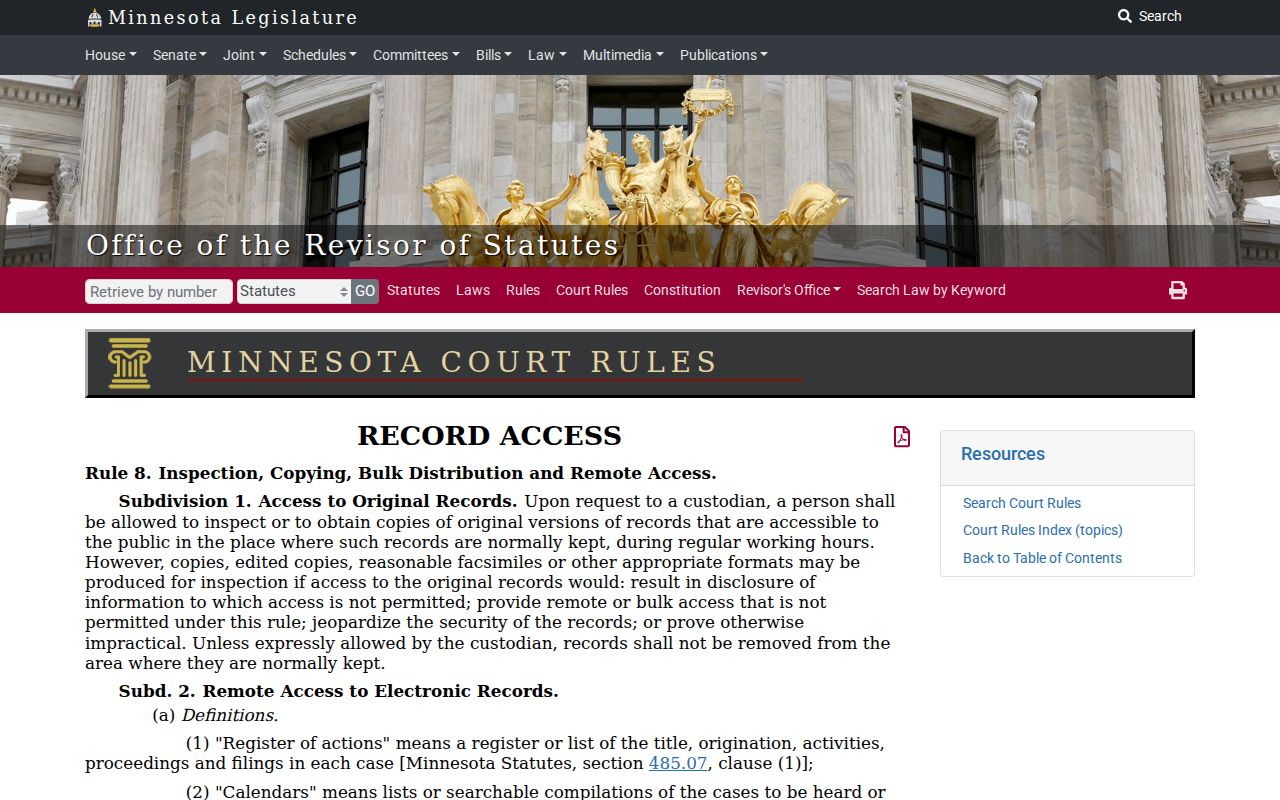
That rule explains a common puzzle. An event can show in the Register of Actions while the full filing sits behind another public access channel.
Watonwan Civil Docket Documents
A docket entry online is not the whole file. A Watonwan civil case can include exhibits and attachments that never reach the web. MCRO Document Search works from a case number. What you can pull depends on the filing date, case category, public designation, and remote-access rules. Some material stays off limits. Addresses, confidential attachments, medical records, financial-source data, and sealed documents can all be withheld. Family and restricted civil-commitment cases carry thinner online coverage than ordinary civil matters.
Sometimes the Register of Actions lists an event. No document link appears. Write down the case number, event title, date, and document index number. Then try MNPAC at the courthouse. Ask Court Administration whether a public paper or image exists. You can also submit a copy request. The Watonwan docket search page also covers the full filing history and the rules for searching by name or number. For the official channels, the state's ways-to-request-copies page spells out each request route.
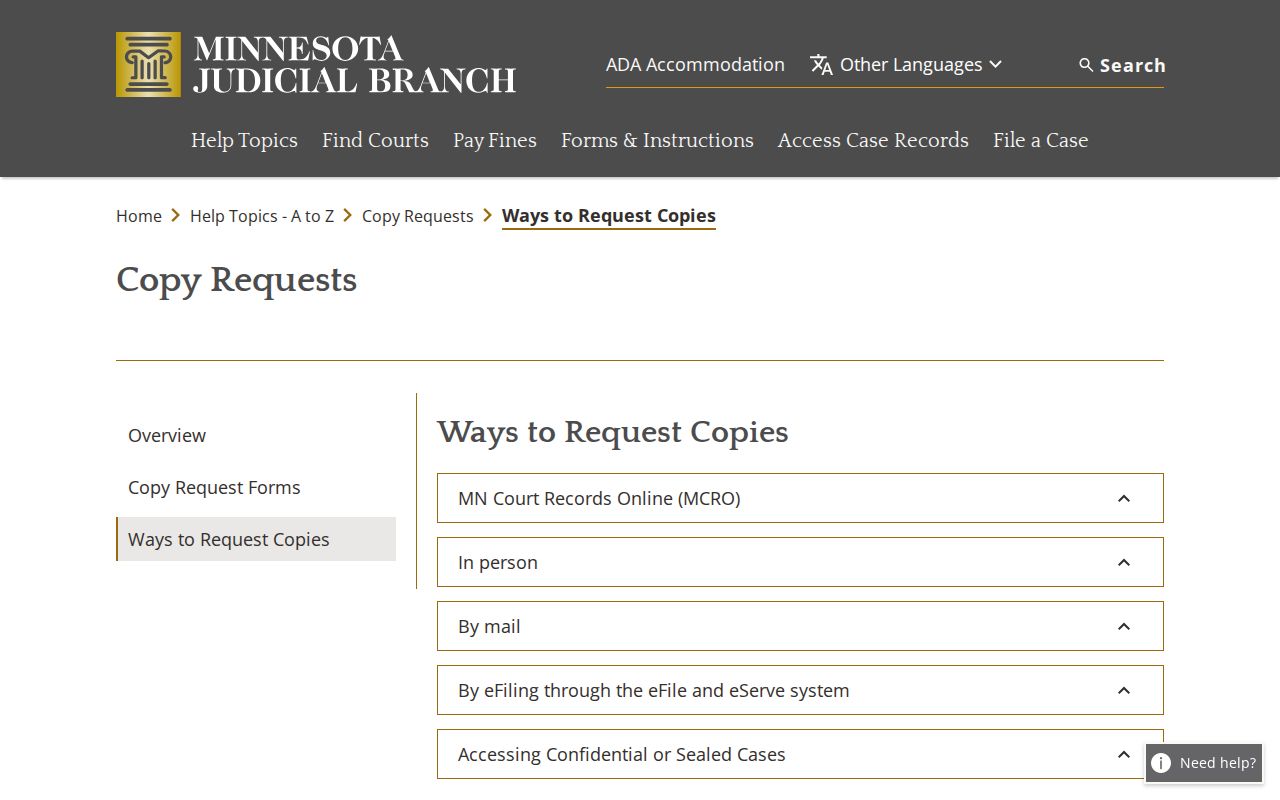
When you request a copy, give the court the specifics. A broad case description only forces staff to guess; a caption, a number, and a document title let them locate the record fast.
Hearings on the Civil Docket
A hearing row shows a setting, not a result. That distinction matters. Watonwan calendar labels include Motion Hearing, Settlement Conference, Default Hearing, Conciliation Hearing, Probate Hearing, Scheduling Conference, and Hearing. Read the latest Hearings row alongside the latest Case Event. A motion hearing or settlement conference does not mean a judgment has been entered.
To confirm a date, use MCRO Hearing Search, Case Details, or the local Watonwan weekly PDF. Hearings, courtrooms, and judicial assignments can change. The county calendar shifts as they do. Watonwan treats the printed calendar outside courtrooms and in public lobbies as the most current local version. A hearing missing online is not cancelled. Call Court Administration at 507-621-6005.
Watonwan Civil Docket Copy Channels
MCRO is the free public register. Its public documents cost nothing to download. Those files are unofficial, though. For public district-court material, MNPAC at the Watonwan courthouse offers the fuller electronic record. Court Administration handles paper stored locally, older off-site records, and certified copies. Reach the office at the counter, by phone at 507-621-6005, or by mail at P.O. Box 518, St. James, MN 56081.
Requests can go in person, by mail, or through eFiling when it fits. A party may file a request into the case through Minnesota eFile and eServe. A nonparty should ask Court Administration about an administrative file number. Keep in mind that eFS is a filing-and-service platform, not the public docket. The Watonwan County Court Administration page names the local office that keeps these court records.
Email works as a contact channel. Confirm with the office before using it to send a copy request. The Minnesota Rules of Public Access table of contents points to the rule set for court records. That rule set governs public access.
Give the office the basic details. Include the caption, the file number if known, the document title, the date, the copy type, and your delivery choice. Those details let staff determine whether the material is public and available. Fees depend on what you order. Before paying for a certified request, recheck the Watonwan district-court fee page, the current source.
Who Can See Civil Dockets
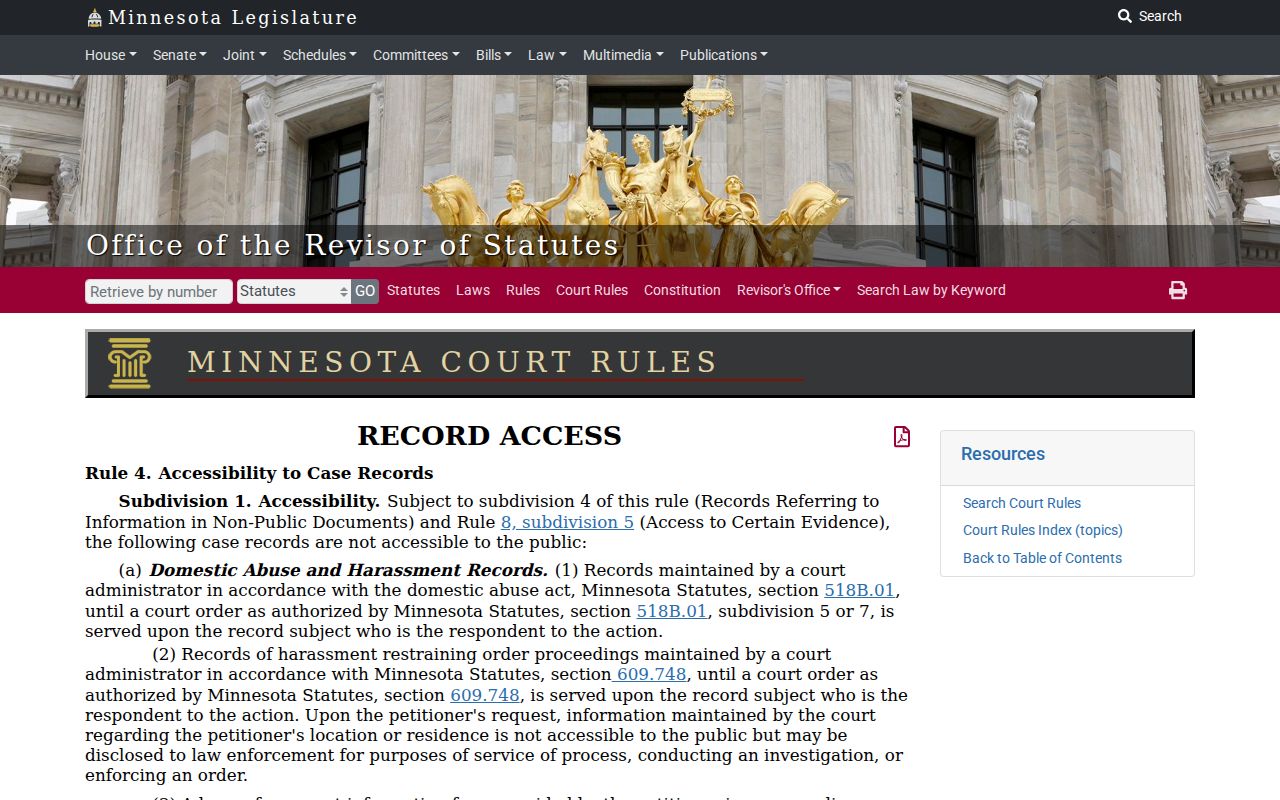
Public access starts with Minnesota Rule of Public Access Rule 2. But the rule set and court orders limit particular data. Rule 4 lists the closed categories. Protected domestic-abuse, juvenile, and medical material falls there. Family Case Information and some court-generated documents may appear remotely. Adoption and protected content do not. A record can be public at the courthouse yet unavailable through MCRO.
Sealed, expunged, or confidential records may vanish from search or show only limited information. Older cases may still sit on paper, microfilm, or in an archive. A named party in a confidential but unsealed case must verify identity. Never push a clerk to open a sealed file informally. Use the applicable access process instead.
The official Rule 4 page sets out the statewide accessibility limits. Those limits shape what remote civil docket results show.
Treat the search result as a pointer. It identifies the court file and the current docket activity, so you can pick the right local or courthouse route for the record itself.
Watonwan Civil Docket Certified Records
Plain copies and MNCIS screen prints are free. A certified civil or criminal instrument costs $14 in Watonwan. An exemplified and certified copy runs $28. A certified transcript of judgment is $40. A certified judgment search costs $5 per name. Check the displayed fee page with Court Administration, since record type and service method can change what you owe.
A judgment entry and a later satisfaction are separate things. A satisfaction records payment or release activity; it does not rewrite the original judgment. For a certified judgment, a current balance, or an official copy, contact Court Administration. An MCRO screen or download is not certified.